
A growing order book should feel like progress, not a warning that your spare room, warehouse team or daily cut-off is about to fail. Effective order fulfilment gives e-commerce brands the operational control to sell across Amazon, Shopify, TikTok Shop and wholesale channels without turning every peak period into a manual firefight.
For UK sellers, fulfilment is not simply the moment a parcel leaves the building. It is the connected process behind stock accuracy, marketplace compliance, picking quality, carrier performance, customer communication and returns. When one part is weak, the cost is felt elsewhere: late dispatch metrics, negative reviews, overselling, expensive rework or frustrated customers asking where their order is.
What order fulfilment really covers
Order fulfilment begins before a customer clicks ‘buy’. Inventory must be received, counted, checked and stored in a location that can be accurately identified by the warehouse management system. Product data, barcodes, sales channels and dispatch rules then need to align, so the correct item is allocated the moment an order arrives.
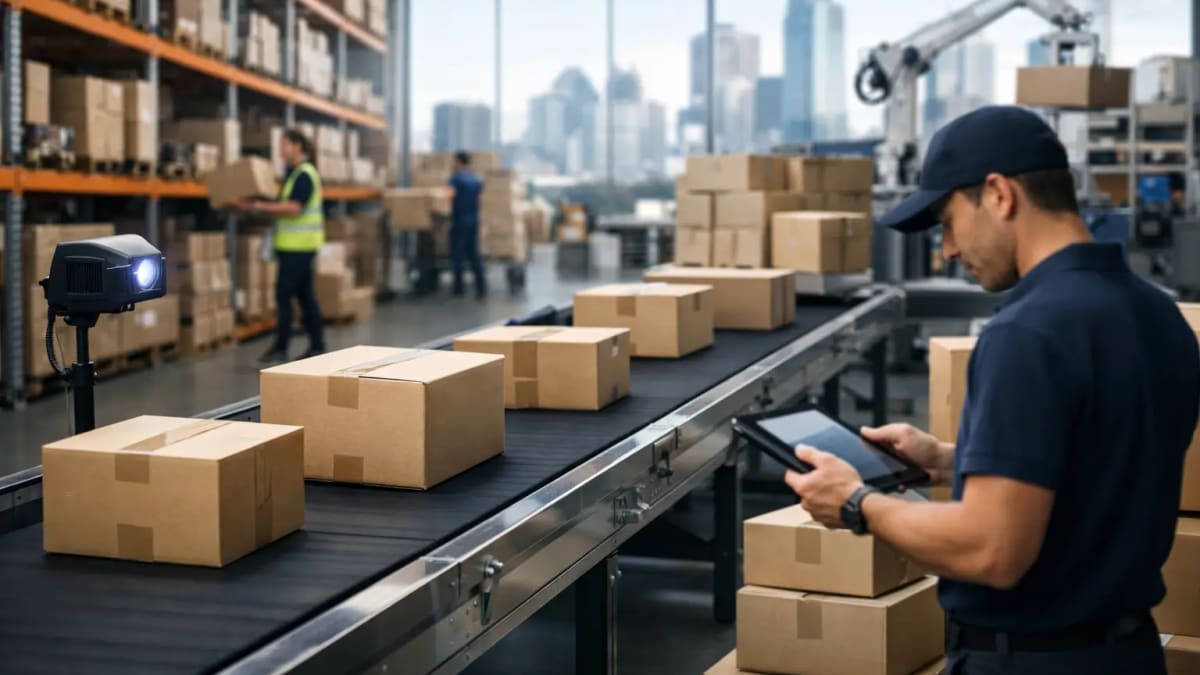
From there, the operational workflow is straightforward in principle but demanding in practice. Orders are imported from connected sales channels, picked against barcode validation, packed to the right specification, labelled for the selected courier and manifested before collection. The customer receives tracking, while stock levels update across the channels where the brand sells.
That final point matters for multi-channel sellers. A brand may hold one pool of stock but sell it through its own website, Amazon, TikTok Shop and a wholesale account. Without real-time inventory controls, the same unit can be sold twice. Good fulfilment protects availability without creating the customer disappointment and cancellation risk of overselling.
Returns also belong in the same picture. A parcel coming back is not merely a cost to process. It is inventory that needs inspection, a customer case that needs a clear outcome and data that can reveal recurring issues with product quality, packaging or delivery expectations. Structured reverse logistics keeps returned stock from becoming unaccounted-for stock.
Why in-house fulfilment becomes a growth constraint
Self-fulfilment works well at the beginning. Founders understand their products, can spot issues immediately and may be able to pack orders cheaply from a home office or small unit. The challenge appears when volume becomes less predictable.
A product launch, promotional campaign, Prime event or TikTok-driven spike can create more orders in a few hours than the team normally handles in a week. At that point, fulfilment competes with the work that actually grows the business: supplier management, product development, marketing, customer service and cash-flow planning.
The hidden cost is not just labour. It is the space taken by slow-moving stock, the time spent printing labels, the risk of packing the wrong variant and the operational knowledge held by one or two people. If those people are away, the process can slow down quickly.
Outsourcing is not automatically the right answer for every seller. A low-volume brand with highly bespoke products may still benefit from keeping fulfilment close to the business. However, once dispatch reliability depends on temporary labour, late nights or a founder stepping away from commercial work, a specialist 3PL becomes a practical route to capacity and control.
Order fulfilment requires precision at every handover
The strongest fulfilment operations are built around repeatable handovers rather than individual heroics. Each handover should be visible, recorded and easy to investigate if something goes wrong.
Receiving and put-away
Stock should be booked in against an expected delivery, checked for quantity and visible damage, then assigned to a defined storage location. This is particularly important when cartons contain several SKUs, sizes or colours. If inbound stock is received loosely, every later stage becomes harder to control.
For Amazon sellers, inbound handling may also include FNSKU labelling, poly bagging, bundling, expiry-date checks, carton labelling and pallet preparation. These requirements are not administrative details. Incorrect prep can lead to refused deliveries, additional fees or stock becoming unavailable when it is needed most.
Picking and packing
A warehouse team needs clear pick instructions, well-organised locations and barcode-led checks. Barcode validation provides a useful control against the common but costly errors of selecting the wrong product, size or quantity.
Packing should reflect the product and channel requirements. Fragile items need protection; premium products may need a particular unboxing standard; Amazon shipments must meet specific preparation rules; and direct-to-consumer orders should arrive in packaging that is practical, presentable and proportionate. Overpacking increases cost, while underpacking risks damage and returns.
Dispatch and carrier selection
Fast dispatch only creates value when it is consistent. A same-day dispatch promise depends on order cut-offs, carrier collection times, warehouse staffing and clear exception handling. It also depends on orders flowing into the system quickly enough to be actioned.
Carrier choice should be based on service level, parcel profile, destination and customer expectation. The cheapest option is not always the most commercial option if it results in poor tracking, missed delivery windows or higher contact volumes for the customer service team. A capable fulfilment partner helps brands apply the right shipping rules without requiring staff to make manual decisions on every order.
Integration creates operational visibility
A warehouse cannot operate efficiently if orders arrive through spreadsheets, emailed PDFs and repeated data entry. Integrations between sales channels, inventory records, warehouse systems and courier platforms reduce manual handling and make fulfilment status visible to the seller.
For a multi-channel brand, this can mean orders from Shopify, Amazon, TikTok Shop and other marketplaces entering one workflow. Inventory updates can then feed back to the relevant channels as orders are dispatched and stock is replenished. The objective is not technology for its own sake. It is fewer touchpoints where data can be delayed, duplicated or entered incorrectly.
Visibility should also support decisions, not just reporting. Sellers need to know what stock is available, what is allocated, what has been dispatched, what is approaching a reorder point and what has been returned. During busy periods, a clear view of backlog and cut-off performance helps operations managers act before service levels slip.
PickPackPro supports this model with integrations across more than 650 marketplaces and courier systems, giving growing brands a structured route from order capture to dispatch confirmation without building their own warehouse infrastructure.
Choosing the right fulfilment model for your sales channels
The right setup depends on what you sell and where you sell it. Amazon FBA prep is designed around sending compliant stock into Amazon fulfilment centres. Seller Fulfilled Prime and FBM fulfilment require tight control of dispatch times, tracking and service performance because the seller remains responsible for the customer delivery experience.
Direct-to-consumer fulfilment places more emphasis on brand presentation, flexible packaging and a delivery experience that supports repeat purchases. Wholesale dispatch may require carton-level labelling, pallet configuration, booking requirements and retailer-specific documentation. A fulfilment operation that understands only one channel can create friction when a brand expands into another.
This is why a single stockholding with channel-specific workflows is often more efficient than separate inventory pools. It can reduce duplicated storage, improve stock visibility and make it easier to move units towards the channel generating demand. The trade-off is that inventory rules must be carefully managed, particularly where Amazon allocation, wholesale commitments and DTC launches compete for the same stock.
What to measure in a fulfilment partner
Price per pick is easy to compare, but it is not enough. A lower headline rate can be expensive if it leads to avoidable errors, poor communication or limited capacity during high-volume periods. Assess the full operating model instead.
Look at dispatch performance against agreed cut-offs, picking accuracy, inventory accuracy, receiving turnaround, returns processing times and the quality of exception reporting. Ask how the warehouse handles damaged stock, address errors, stock discrepancies and carrier collection failures. The answer should describe a documented process, not a vague assurance that the team will ‘sort it out’.
It is also sensible to assess scalability. Can the provider absorb promotional peaks? Can they support new marketplaces, additional SKUs, kitting or Amazon prep without forcing a complete operational change? The best partnership gives a brand room to grow while maintaining disciplined controls.
Order fulfilment should become quieter as your business grows. When stock is visible, orders flow automatically, warehouse checks are built into the process and exceptions are managed early, operations stop demanding constant attention. That gives your team the confidence to pursue the next sales channel, campaign or product launch knowing the delivery promise can be met.

Comments
Share your thoughts. No account needed — once posted, comments cannot be edited.
Loading comments…