
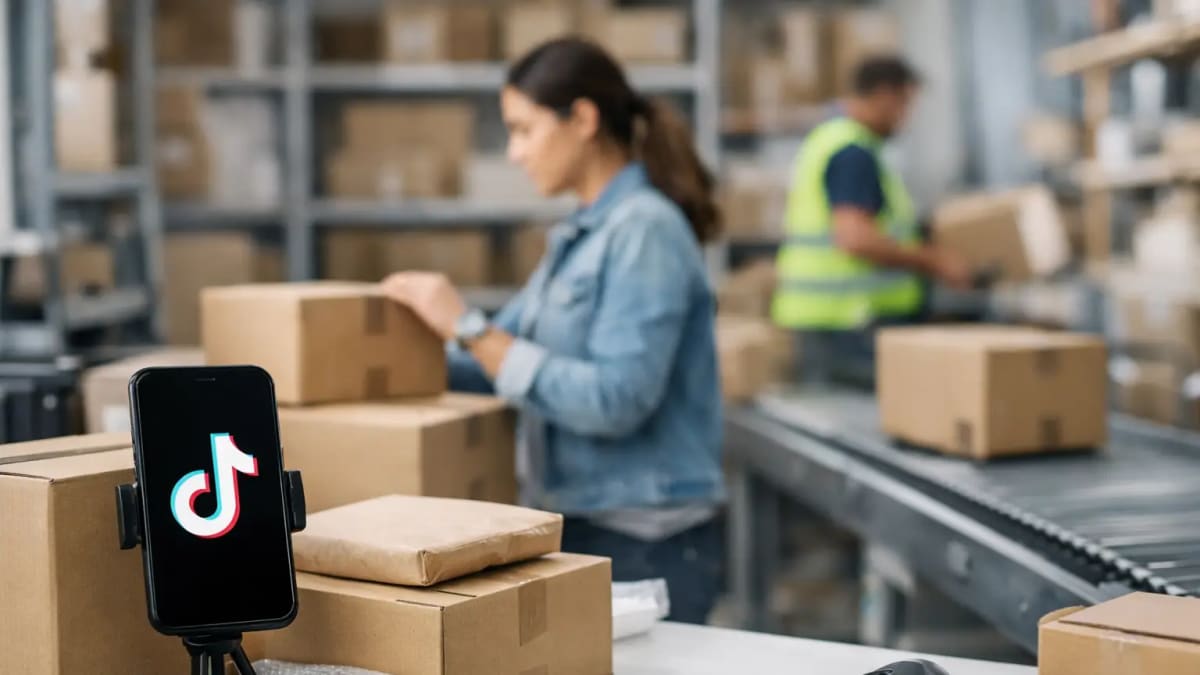
A product goes viral at 9.17pm, orders spike before midnight, and by morning your warehouse process is the difference between momentum and complaints. That is the real pressure behind tiktok shop fulfilment. It is not simply about picking and packing boxes quickly. It is about converting demand shaped by content into accurate, on-time delivery without creating bottlenecks that damage reviews, cash flow or repeat purchase rates.
TikTok Shop compresses the gap between discovery and purchase. Customers see a product, buy in the moment, and expect dispatch to move just as fast as the video that sold it. For sellers, that changes the fulfilment model. Slow batch processing, manual order checks and disconnected stock management can hold up growth long before marketing runs out of ideas.
Why TikTok Shop fulfilment is operationally different
Unlike more search-led marketplaces, TikTok Shop often produces sharp order swings. A creator mention, paid campaign or well-timed live session can move volume in hours rather than days. That creates a different warehouse demand profile. Staffing, stock positioning, order routing and courier cut-off management all need to cope with rapid peaks.
The challenge is not only speed. Accuracy matters just as much. A sudden rise in orders increases the risk of mis-picks, oversells and dispatch delays if systems are not tightly controlled. Barcode validation, real-time inventory updates and clear standard operating procedures become essential. Without them, sales growth creates service problems.
There is also a customer expectation issue. Buyers on TikTok Shop are used to immediacy. If tracking is slow to update or orders sit unprocessed, the gap between purchase excitement and delivery experience becomes very obvious. That can affect seller ratings and reduce the long-term value of short-term sales spikes.
What good TikTok Shop fulfilment looks like
A strong setup starts before the first parcel is packed. Orders need to flow directly from TikTok Shop into the fulfilment system with minimal manual intervention. Stock levels should update in real time across channels so that TikTok sales do not create problems on Amazon, Shopify or other marketplaces. If you sell in more than one place, disconnected inventory is one of the fastest ways to create avoidable exceptions.
From there, the warehouse process needs precision. Goods-in should be checked properly, products stored in clearly mapped bin locations, and orders picked against verified data rather than paper-based guesswork. Smart fulfilment is usually less about dramatic innovation and more about disciplined execution. The businesses that dispatch reliably at scale tend to have tighter process control, not louder claims.
Packing also matters more than many sellers expect. TikTok Shop orders are often consumer-facing brand touchpoints, not just marketplace transactions. Packaging has to protect the item, support cost-efficient carrier selection and maintain presentation standards. If your average order value is modest, excessive packaging eats margin. If it is too light, returns and damage claims increase. The right balance depends on product type, parcel dimensions and courier profile.
The workflow behind a scalable operation
There are four stages that usually define whether tiktok shop fulfilment can scale cleanly.
1. Store connection and order automation
The first requirement is accurate integration. Orders should import automatically, courier rules should apply consistently, and service levels should be visible from the moment an order lands. Manual downloads and spreadsheet workarounds might function at low volume, but they create delays and errors once order counts rise.
2. Inventory control across channels
Many TikTok Shop sellers are not TikTok-only sellers. They are also shipping through Amazon FBM, Shopify, wholesale accounts or other channels. That means stock cannot be managed in isolation. Real-time visibility is critical if you want to avoid overselling one hero SKU after a successful campaign.
3. Pick, pack and dispatch discipline
Fast dispatch is only valuable if it is accurate. A structured warehouse should use barcode-led checks, defined packing standards and clear cut-off times linked to courier collections. Same-day dispatch is commercially powerful, but only when the process is repeatable rather than dependent on firefighting.
4. Returns and reverse logistics
Returns handling is often ignored in growth conversations, yet it is a core part of the customer experience and stock recovery cycle. A structured reverse logistics process helps resell suitable inventory quickly, identify recurring product issues and keep warehouse space under control. For fast-moving social commerce brands, that matters more than many founders realise.
The in-house versus outsourced decision
Some businesses can handle TikTok Shop orders internally for a period, especially when product ranges are simple and order volume is still predictable. If you are dispatching a manageable number of parcels a day from one location, self-fulfilment may give you close control and lower short-term fixed cost.
The trade-off appears when volume becomes inconsistent. Viral demand is hard to staff for. Too much labour during quiet periods hurts margin, while too little labour during peaks causes backlogs. Space becomes another issue. Stock for social commerce campaigns often needs to be held ahead of demand, and many growing brands run out of organised storage before they run out of ambition.
Outsourcing to a specialist 3PL makes more sense when fulfilment is becoming a management problem rather than a competitive advantage. The right partner gives you warehouse capacity, courier access, process consistency and system integration without the cost of building that infrastructure yourself. That said, not every 3PL is a good fit. If they are not set up for marketplace compliance, same-day processing and multi-channel stock control, you can simply move the bottleneck elsewhere.
What to look for in a TikTok Shop fulfilment partner
Technology matters, but process maturity matters just as much. A provider should be able to connect order flows cleanly, support real-time visibility and operate with barcode-validated accuracy. You also want clarity around service levels, cut-off times, storage logic and exception management.
Experience with multiple channels is a major advantage. Many brands selling on TikTok Shop are also balancing Amazon requirements, direct-to-consumer orders and occasional wholesale movements. A fulfilment partner that understands those overlapping demands can reduce operational friction rather than create separate workflows for each sales route.
Compliance is another practical factor. If you handle products that need specific prep, labelling or packaging standards, the warehouse needs documented procedures rather than ad hoc handling. Precision execution is what protects both customer experience and margin.
For UK sellers, location and carrier strategy can also affect performance. A centrally positioned operation with strong courier integration can shorten transit times and support later cut-offs. That becomes particularly valuable when demand surges without much warning.
Common problems that slow sellers down
One of the biggest issues is treating TikTok Shop as a side channel. When operations teams bolt it onto an existing setup without updating inventory rules, warehouse capacity or customer service expectations, issues build quickly. The channel may begin as incremental volume, but it rarely stays neat for long.
Another problem is poor SKU discipline. Variants, bundles and promotional packs need clean product data and clear pick logic. If not, a successful campaign can create avoidable confusion on the warehouse floor. What looks like a marketing win from the front end can become a fulfilment problem in the back end within hours.
Sellers also underestimate exception handling. Address issues, failed payments, stock discrepancies and return queries all multiply with volume. A strong fulfilment operation is judged not only by how it handles standard orders, but by how calmly it manages the orders that do not fit the standard path.
The commercial case for getting it right
Good fulfilment does more than move parcels. It protects conversion, supports seller ratings, reduces customer service load and gives brands more confidence to scale campaigns. When operations are stable, marketing teams can push harder because the warehouse is not the limiting factor.
That is where a disciplined fulfilment model starts to pay back. Faster processing can improve marketplace performance. Better stock visibility can reduce lost sales. Lower error rates can protect margin. Structured returns can recover stock more quickly. None of that is glamorous, but it is exactly what helps social commerce become commercially sustainable.
For businesses that are scaling across marketplaces, the strongest setup is usually one that treats TikTok Shop as part of a wider fulfilment ecosystem rather than a separate problem. That means one operational spine supporting multiple channels, shared stock accuracy, consistent dispatch rules and clear reporting. PickPackPro works with brands facing that exact challenge, where growth depends on turning fast-moving orders into controlled, repeatable execution.
If TikTok Shop is starting to generate serious volume, the right question is not whether your current process can cope this week. It is whether it can still perform when the next campaign lands, the next creator feature hits, and your order curve stops being predictable.

Comments
Share your thoughts. No account needed — once posted, comments cannot be edited.
Loading comments…