
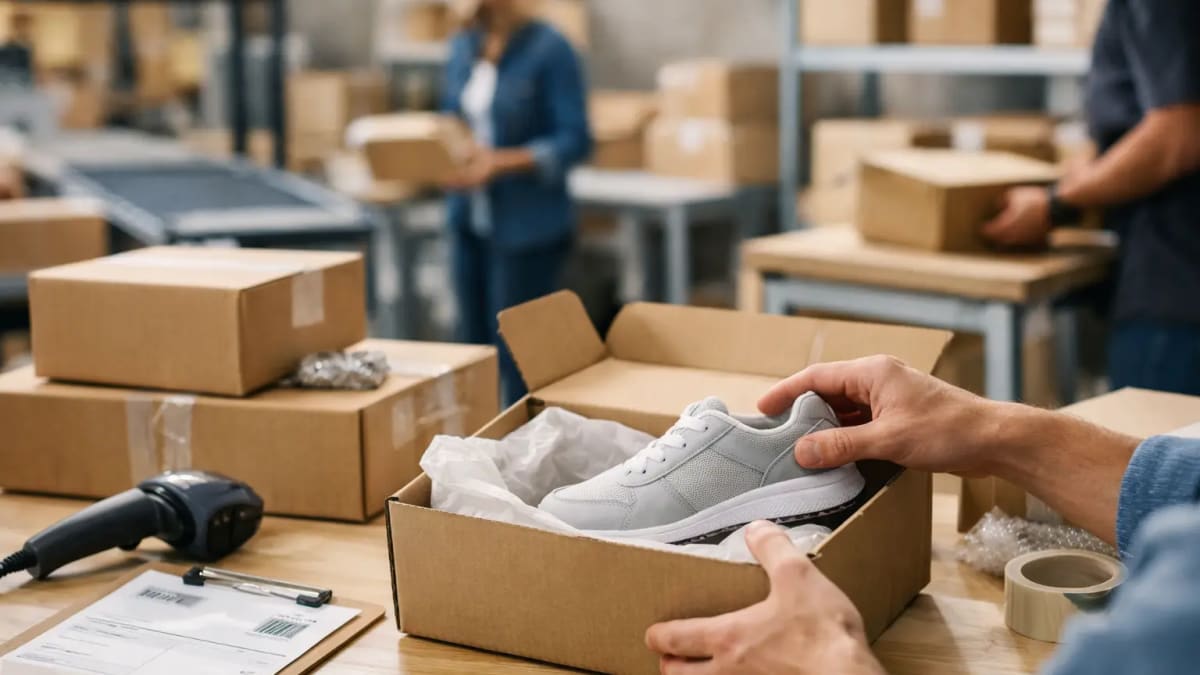
A return is not simply an order travelling in the opposite direction. It is stock, customer experience, cash flow and marketplace compliance arriving back at the warehouse at the same time. This reverse logistics guide ecommerce sellers can use sets out how to turn that pressure into a controlled, measurable process.
For growing brands, returns often become difficult when sales accelerate. Parcels arrive without clear references, sellable items sit in cages too long, refunds are delayed, and stock records no longer match physical inventory. The cost is not limited to postage or labour. Poor reverse logistics can reduce available stock, create avoidable write-offs and damage seller performance on marketplaces where response times matter.
What reverse logistics means in ecommerce
Reverse logistics is the structured movement of products from the customer, marketplace or retail channel back into your control. It covers return authorisation, carrier receipt, identification, inspection, disposition, inventory updates and the onward action for each unit.
That onward action depends on condition and commercial value. An unopened item may return to available stock. A product with damaged packaging may be suitable for a discounted channel. A faulty unit may need to be quarantined for supplier review, while an unsellable item may require compliant disposal. The objective is not to process every return in the same way. It is to make the correct decision quickly, consistently and with evidence.
For Amazon sellers, the process can be more complex because fulfilment method matters. FBA returns, FBM orders and Seller Fulfilled Prime orders have different operational controls and customer-service expectations. A Shopify or TikTok Shop return may also need a different workflow depending on the returns policy, courier label and connected inventory system. One warehouse process should accommodate those differences without creating manual workarounds.
Why reverse logistics is now a growth function
Forward fulfilment receives most of the attention because it creates the customer’s first delivery experience. Reverse logistics determines how efficiently a business recovers value when that order does not stay with the customer.
A slow returns process ties up sellable stock precisely when demand may be increasing. If a £30 product takes three weeks to be inspected and booked back into inventory, the issue is not merely a delayed refund. It may force a replenishment purchase, increase storage use and contribute to an unnecessary stock-out.
Returns data also reveals problems that dispatch data alone cannot. Repeated returns for the same SKU may point to an inaccurate product description, sizing issue, weak packaging or a quality-control failure from a supplier. A spike in transit damage may indicate that the pack specification needs to change. Treating returns as a reporting stream, rather than a warehouse nuisance, gives operations and commercial teams a clearer basis for action.
Build a controlled reverse logistics workflow
A reliable process starts before the parcel reaches the warehouse. Each return needs a reference that connects it to an order, SKU, customer and reason code. Without this, warehouse teams spend time investigating unidentified goods and customer-service teams cannot provide accurate updates.
1. Authorise and identify each return
Create a return authorisation workflow that captures the order number, sales channel, reason for return, product condition claimed by the customer and the required resolution. Where possible, use a barcode or RMA reference that can be scanned on arrival.
This does not mean every return needs the same level of approval. Low-value apparel may require a faster, more automated route than a high-value electronic product or a bundled Amazon item. The right level of control depends on product risk, margin and fraud exposure. What matters is that the rule is documented and applied consistently.
2. Receive and scan at the warehouse
On arrival, returned parcels should be received into a designated area, scanned and timestamped. This creates a clear chain of custody and prevents returns from being mixed with inbound replenishment or outbound pick stock.
A barcode-led process gives the seller real-time visibility of what has arrived and what remains in assessment. It also allows the warehouse to prioritise time-sensitive exceptions, such as goods requiring a prompt refund decision or stock needed for an upcoming sales event.
3. Inspect against defined standards
Inspection should be based on an agreed checklist, not individual judgement. The warehouse team needs clear criteria for packaging condition, product completeness, functionality, hygiene seal status, expiry dates where relevant, serial numbers and signs of use or damage.
Photographic evidence is useful for high-value, disputed or damaged returns. It supports supplier claims, carrier claims and decisions where a refund may be challenged. However, photographing every low-value return may add cost without improving control. This is a practical trade-off: apply deeper inspection where the financial exposure justifies it.
4. Assign a disposition immediately
Once inspected, every unit needs a defined next step. Leaving goods in a general returns area is where value recovery slows down. A structured reverse logistics process normally assigns stock to one of these outcomes:
- Return to available inventory after condition and barcode checks.
- Rework, such as relabelling, repacking, poly bagging or bundling.
- Hold in quarantine for supplier, quality or fraud investigation.
- Route to clearance, refurbishment, donation or other approved recovery channel.
- Dispose of securely where resale is not appropriate or compliant.
The best disposition is not always resale. For a low-margin item with a damaged retail box, the labour and materials needed to rework it may exceed the likely recovery. For a high-value item, the same rework may be commercially worthwhile. Decision rules should reflect the product’s margin, recovery value and handling cost.
5. Update inventory and customer status
The inventory system must reflect the outcome, not just the parcel’s arrival. Available stock, quarantine stock, damaged stock and stock awaiting rework should remain clearly separated. This prevents a returned item from being sold again before it has passed inspection.
For multi-channel sellers, accurate updates matter across every connected storefront and marketplace. Overselling occurs when a product appears available online but is physically waiting for assessment. Integration with order management and warehouse systems reduces that risk, but only if SKU mapping and disposition statuses are set up correctly from the start.
The operational data that makes returns manageable
Returns become harder to improve when the only measure is a total count. Track the return rate by sales channel, SKU, supplier, reason code and condition outcome. Then review how quickly the warehouse receives, inspects and releases each unit.
Useful operational measures include return-to-inspection time, percentage returned to sellable stock, recovery value, damage rate, incomplete-return rate and the cost to process a unit. A high return rate is not automatically a warehouse failure. Fashion, gifting and fit-sensitive categories can naturally generate more returns. The concern is unexplained movement, slow processing or a low percentage of recoverable stock.
Reason codes deserve particular attention. “Changed mind” may be accurate, but it can also conceal poor product information, late delivery or inconsistent expectations. Keep the code structure simple enough for customers and warehouse staff to use correctly, while detailed enough to show meaningful trends.
Marketplace compliance and product-specific controls
Reverse logistics must follow the same discipline as outbound fulfilment. Amazon inventory may need specific labelling, condition handling and prep before it can be sent back into an FBA workflow. Products that have been opened or returned without packaging should never be assumed fit for resale simply because they look intact.
Certain categories need additional controls. Cosmetics, food, supplements, medical-related products, batteries and products with expiry dates may have hygiene, safety, traceability or storage requirements. For these goods, quarantine and documented inspection are essential. Sellers should agree in advance what the warehouse can rework, what needs brand approval and what must be removed from sale.
This is also where a specialist 3PL adds operational value. PickPackPro can apply structured SOPs, barcode validation and agreed disposition rules across returns, Amazon prep and multi-channel stock, so that products do not disappear into an untracked exception process.
When to outsource returns handling
In-house returns can work when volumes are low, products are simple and the team has enough space to separate returned stock from daily dispatch. It becomes less effective when staff are interrupting pick and pack work to inspect parcels, when different channels have different return rules, or when stock visibility is becoming unreliable.
An outsourced setup should not mean losing control. Ask for clear receiving SLAs, inspection standards, evidence requirements, inventory status definitions and reporting frequency. Confirm who authorises rework, clearance and disposal, especially for branded products. The right partner gives you operational visibility while taking repetitive warehouse decisions out of your daily workload.
A well-run returns process protects more than margin. It keeps sellable stock moving, gives customers faster outcomes and gives your team evidence to fix the causes behind avoidable returns. Set the rules before volume forces the issue, then let every returned parcel follow a controlled route back to value.

Comments
Share your thoughts. No account needed — once posted, comments cannot be edited.
Loading comments…