
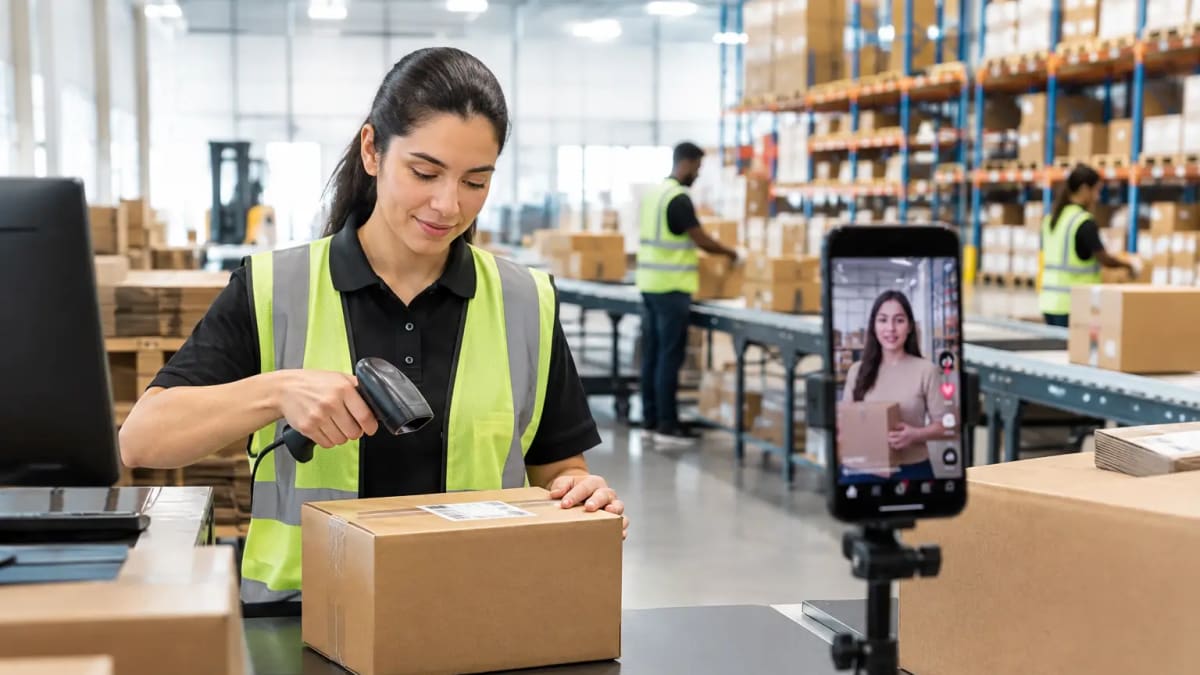
A TikTok video can turn a steady product line into hundreds of orders before your warehouse team has finished the morning pick. That is why sellers ask, can 3PLs handle TikTok orders? The answer is yes, but only when the 3PL has the right systems, warehouse discipline and carrier capacity to manage the speed and unpredictability of TikTok Shop demand.
TikTok Shop fulfilment is not simply standard e-commerce dispatch with another sales channel attached. Order spikes are sharper, customer expectations are immediate, and stock accuracy can change the outcome of a campaign. A capable fulfilment partner gives your brand the operational control to sell at pace without risking late dispatches, overselling or poor customer experience.
Can 3PLs Handle TikTok Orders Reliably?
A specialist 3PL can receive TikTok Shop orders automatically, pick and pack them against defined rules, create shipping labels and confirm dispatch back to the platform. The key word is automatically. Manual order exports may work while you process a handful of daily sales, but they quickly create delays and stock discrepancies when a product gains traction.
The strongest set-up connects TikTok Shop with the warehouse management system, allowing orders, inventory levels, order status and tracking information to move between systems without repeated manual intervention. This gives you a clearer view of what is available to sell and what has already left the fulfilment centre.
Reliability also depends on what happens inside the warehouse. Barcode-validated picking, documented packing instructions and clear cut-off times reduce the errors that tend to surface when volume rises. For TikTok sellers, this matters because a sudden increase in orders does not leave much room to correct a poor process after the fact.
Not every 3PL is built for this work. Some providers focus on pallet storage or large B2B distribution and may not have the systems or labour model for high-volume, individual parcel dispatch. Before outsourcing, establish whether the provider actively supports TikTok Shop workflows rather than treating them as an exception.
Why TikTok Shop Creates Different Fulfilment Pressures
TikTok is built around discovery. Demand can be driven by a creator mention, a live selling session, affiliate content or a product demonstration that lands with the right audience. Sales may arrive in concentrated bursts rather than following a predictable weekly pattern.
That creates four practical pressures for a fulfilment operation:
- Fast order release and same-day dispatch capacity
- Accurate live inventory across TikTok Shop and other channels
- Flexible labour for campaign peaks and promotional events
- Consistent packaging and tracking communication at higher volumes
These requirements are closely connected. If inventory is not synchronised, you can sell stock that has already been allocated to Amazon, Shopify or another marketplace. If picking accuracy drops during a rush, returns and customer service enquiries increase. If dispatch misses the agreed carrier collection, order performance can suffer.
For sellers running multi-channel operations, the issue is rarely TikTok Shop alone. It is the competition for the same stock across every channel. A 3PL should therefore manage inventory from a central system, with rules that protect your priority channels and prevent avoidable overselling.
What a TikTok Shop Fulfilment Workflow Should Look Like
A dependable process starts before the first order arrives. Your 3PL should receive goods into stock accurately, inspect quantities where agreed and assign each product a clear SKU or barcode. This is particularly important where similar variants, bundles or promotional packs are involved.
Once the TikTok Shop integration is connected, orders should flow into the warehouse management system on a frequent, automated basis. The warehouse team picks each order using barcode checks, applies any branded inserts or packaging requirements, and selects the correct delivery service. Tracking should then be sent back to the sales channel once the parcel is manifested and dispatched.
A well-run operation also needs exception management. Address errors, out-of-stock products, cancelled orders and damaged items should not disappear into an inbox. There should be defined rules for how those cases are flagged and resolved, including who can approve substitutions, partial shipments or customer-contact decisions.
Returns need the same level of control. TikTok-driven purchases can attract first-time buyers who are unfamiliar with your brand, so returns data can reveal problems with product pages, sizing, packaging or delivery expectations. Your 3PL should record returned stock, inspect it against agreed standards and separate resaleable items from damaged or unsuitable inventory.
The Integration Question: Automation Is Not Optional at Volume
The connection between TikTok Shop and your 3PL is often the deciding factor in whether outsourcing creates capacity or merely moves admin elsewhere. Ask how the integration handles order import, inventory updates, cancellation requests, tracking confirmation and product mapping.
Product mapping deserves particular attention. Your TikTok listing SKU must match the SKU used by the warehouse. Where you sell multipacks or bundles, the system needs to understand the component stock consumed by each sale. Without this, inventory figures can look healthy until the warehouse discovers that one item within a bundle has run out.
You should also understand the timing of stock updates. Near-real-time updates are preferable for fast-moving lines, but the right approach depends on your sales volume, product range and channel mix. If an integration updates stock less frequently, you may need a sensible buffer to avoid selling the final units twice.
PickPackPro, for example, supports integrations across more than 650 marketplaces and courier systems. That breadth can be valuable for brands that want TikTok Shop to sit alongside Shopify, Amazon and other channels within one fulfilment operation, rather than creating separate stock pools and separate processes.
Dispatch Performance Still Comes Down to Warehouse Capacity
Software can route an order, but it cannot pack a parcel or hand it to a carrier. When assessing whether a 3PL can support your TikTok growth, ask direct questions about physical capacity.
What is the provider's same-day dispatch cut-off? How do they staff flash-sale periods? Can they support promotional campaigns with advance notice? Which carrier services are available, and what happens if a collection is delayed? A clear answer is more valuable than a broad promise to “scale with you”.
Location can also affect delivery performance and inbound stock flow. A centrally placed UK fulfilment centre, such as one in Milton Keynes, can support efficient nationwide parcel distribution and practical routing to UK Amazon fulfilment centres for sellers operating across both channels. It does not remove the need for good carrier management, but it can reduce unnecessary handling and transit complexity.
There is a trade-off to consider. The lowest per-order fulfilment quote may not include the operational flexibility required for unpredictable TikTok demand. Confirm charges for receiving stock, storage, picks, packaging, inserts, returns, urgent work and peak-period activity. Transparent pricing makes it easier to compare providers and protect margin as order volume changes.
Prepare Your Brand Before You Outsource
A 3PL works best when your product data and operating rules are clear. Give the warehouse accurate dimensions and weights, approved product images where useful, packing instructions, bundle definitions and escalation contacts. If your products are fragile, regulated, temperature-sensitive or prone to fraud, state this during onboarding rather than after the first problem.
Build a launch plan for major TikTok activity. Tell your fulfilment partner about live events, creator campaigns, discount periods and stock arrivals. Forecasts will never be perfect, but even a rough indication allows the warehouse to plan labour, packaging materials and carrier collections.
It is also sensible to begin with a controlled range of SKUs or a defined order volume. This gives both sides time to test product mapping, packaging standards, dispatch reporting and returns handling before your largest campaign is live. Scaling in stages is often safer than moving every product during a high-demand period.
Choosing a 3PL for TikTok Shop Growth
The right partner should be able to explain its process in operational terms. Look for evidence of barcode controls, SOP-led workflows, automated channel connections, clear service levels and practical support during peaks. Ask for examples of how they manage multi-channel stock, not just how quickly they can ship a standard parcel.
You should also assess communication. A fulfilment partner does not need to make every decision for you, but it should flag risks early: low stock, incomplete inbound deliveries, damaged goods, carrier disruption or unusual order patterns. That visibility helps you act before an operational issue becomes a customer-facing problem.
TikTok Shop can create remarkable momentum, but the commercial upside depends on delivering the experience your content has promised. With the right 3PL, fulfilment becomes a controlled part of growth: orders are processed accurately, stock stays visible and your team can focus on products, campaigns and customers rather than packing benches. Choose a partner that can fulfil with precision when demand is ordinary and when your next video changes everything.

Comments
Share your thoughts. No account needed — once posted, comments cannot be edited.
Loading comments…